Quikcell Website Redesign
Overview
Tools
Problem
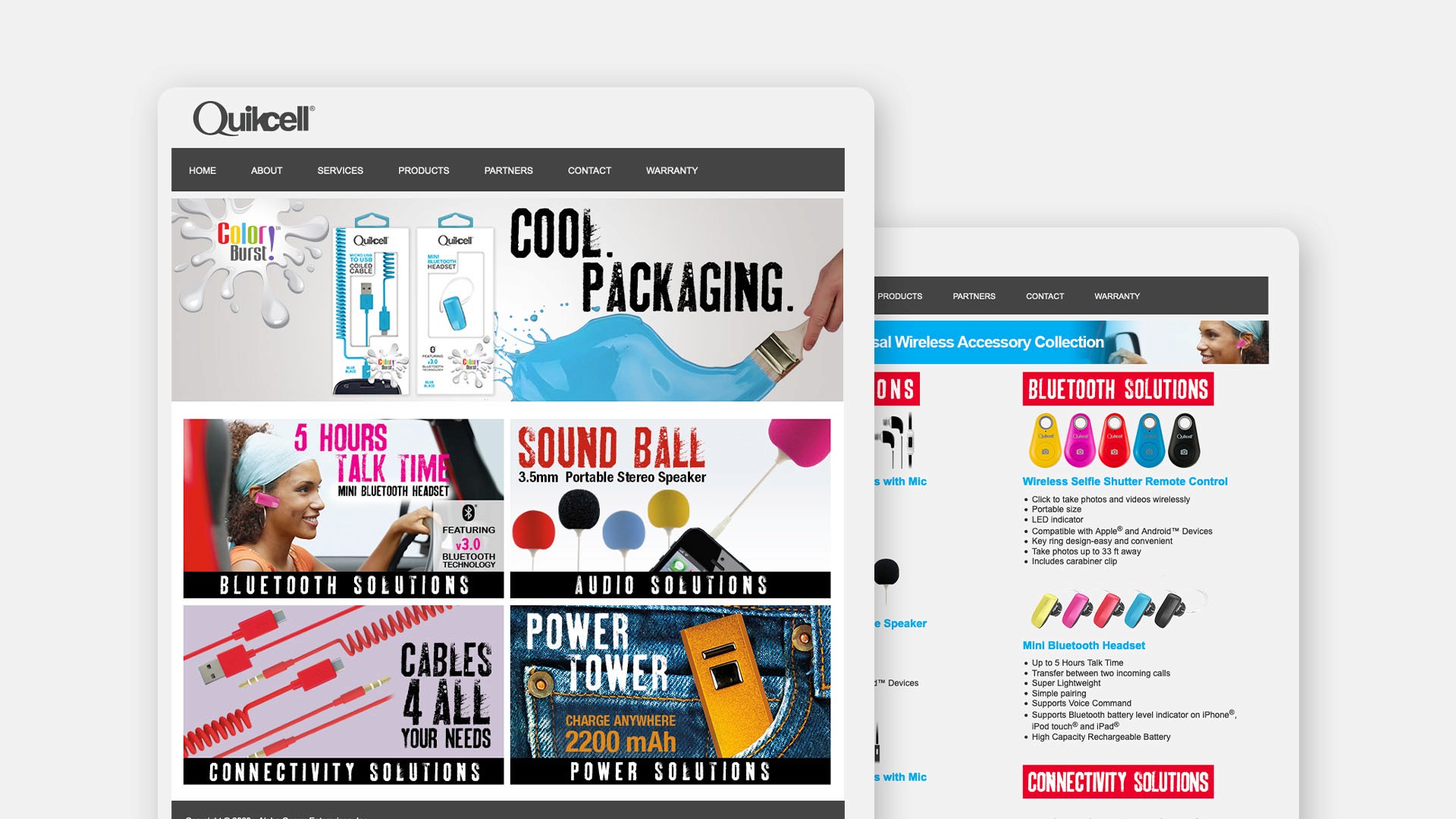
The existing site presented every product on a single undifferentiated page, making it difficult for visitors to understand the full range of offerings or find what they needed. There was no structured support content, no clear navigation hierarchy, and no pathway for B2B partners to find product documentation or brand messaging. The site was creating confusion for both end consumers and retail partners, and the brand experience suffered as a result.
Research
Before any design work began, the team conducted foundational research to understand what the site needed to do differently. A content audit and heuristic review surfaced the core usability problems: the all-in-one product page created cognitive overload and the navigation offered no real wayfinding. Behavioral data pointed to high bounce rates and low engagement beyond the homepage. Users were arriving with intent but leaving without finding what they came for.
Stakeholder interviews with sales and leadership added another dimension. B2B clients were repeatedly confused about where to find product documentation, setup guidance, and brand messaging. That feedback directly shaped the decision to build a centralized support hub as a core part of the redesign. Based on qualitative research, two overlapping user groups emerged: retail partners and end consumers who shared many needs but diverged significantly in their support expectations. The final architecture needed to serve both without creating separate experiences.
Process
Content reorganization. Products were grouped into logical categories: cases, chargers, screen protection, audio, and given dedicated pages to reduce cognitive load and create clear browsing paths.
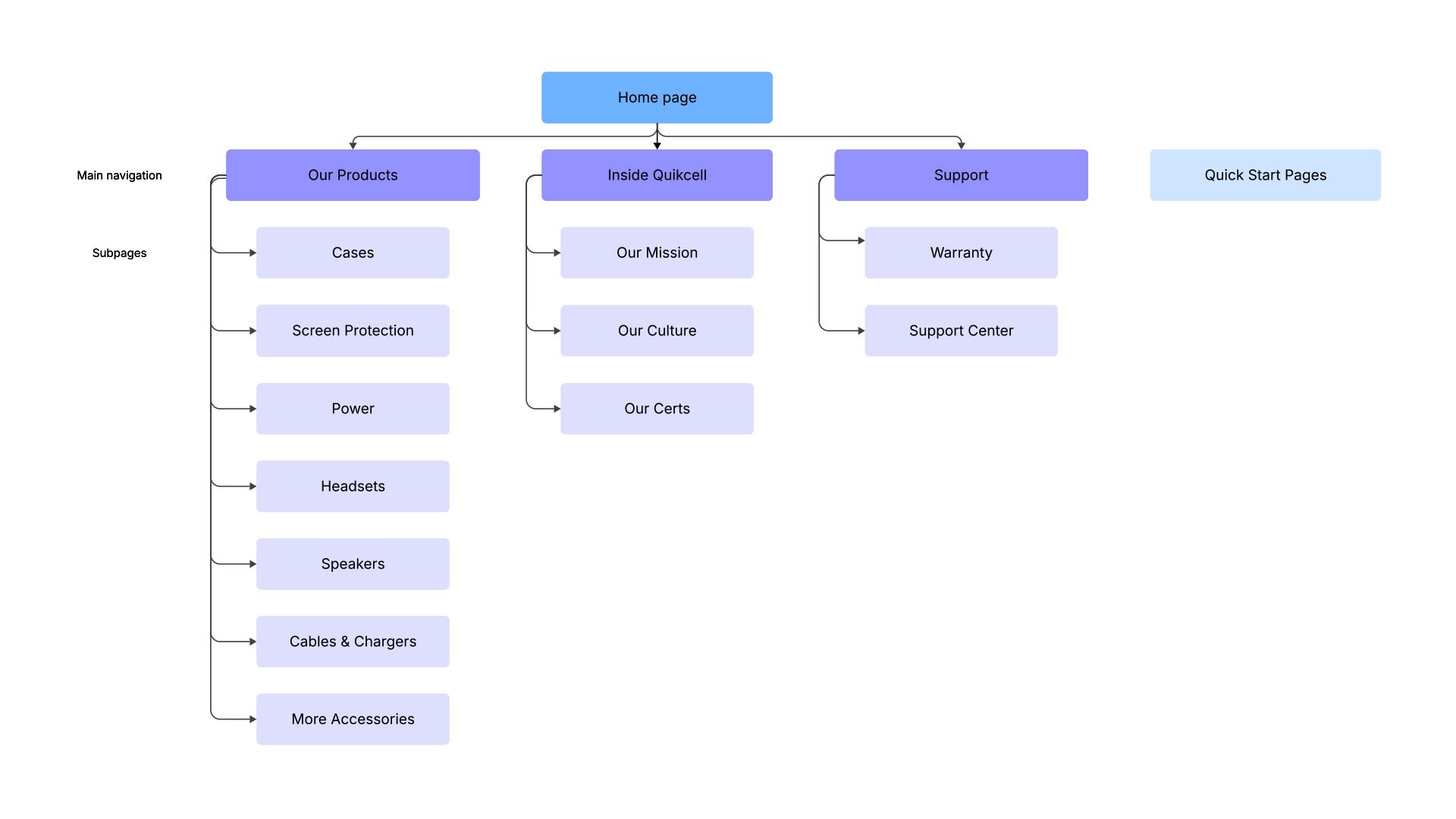
Site architecture. A new structure was built around three pillars: dedicated product category pages, an "Inside Quikcell" brand storytelling section, and a centralized support hub.
Support hub. A unified support destination was built with FAQs, troubleshooting content, warranty information, and multimedia how-to resources, structured to serve both consumer and partner audiences from a single entry point.
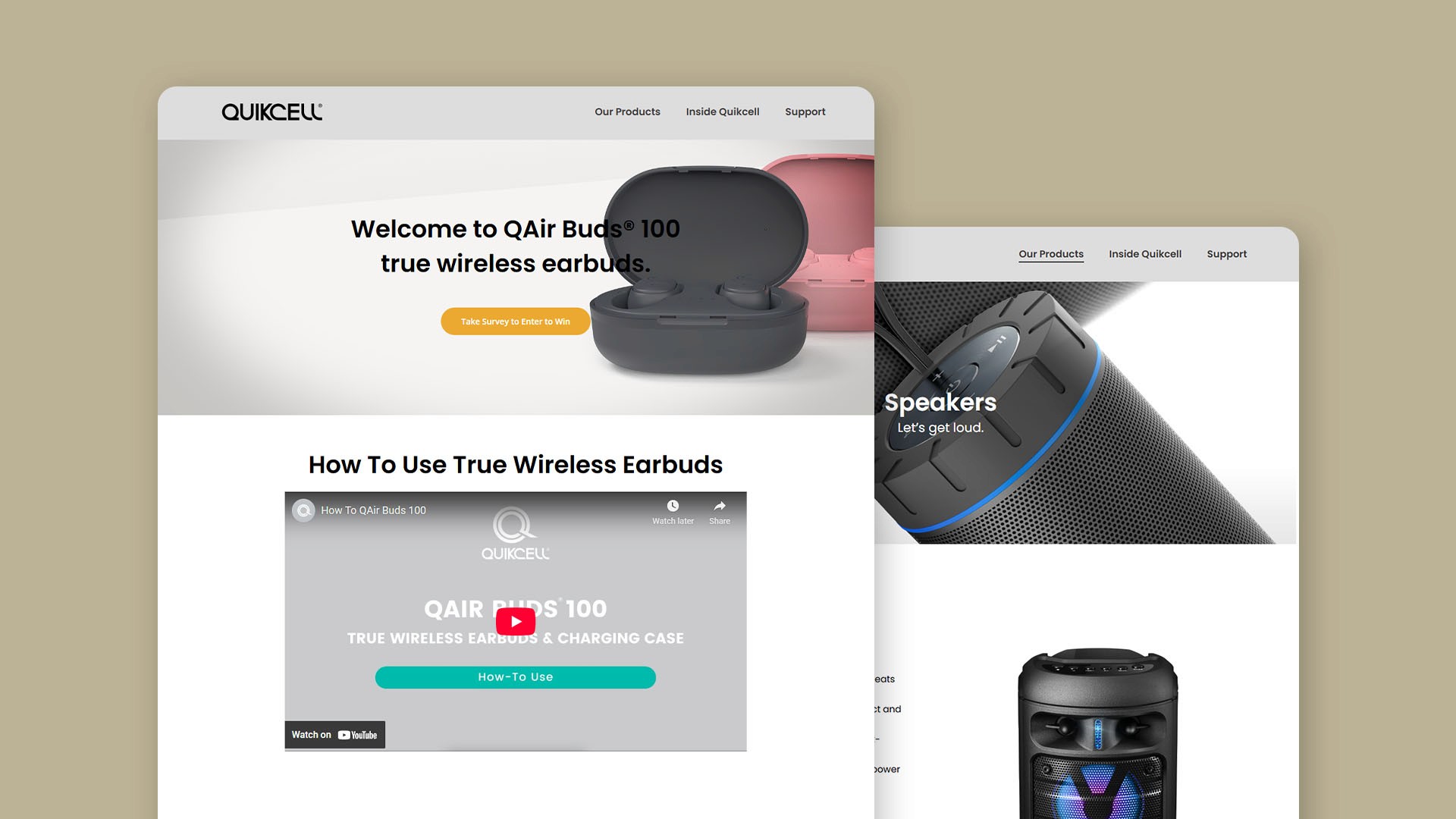
Quick Start pages. Mobile friendly setup guides were designed and linked directly from QR codes printed on product packaging, solving the post purchase support gap without requiring additional customer service touchpoints.
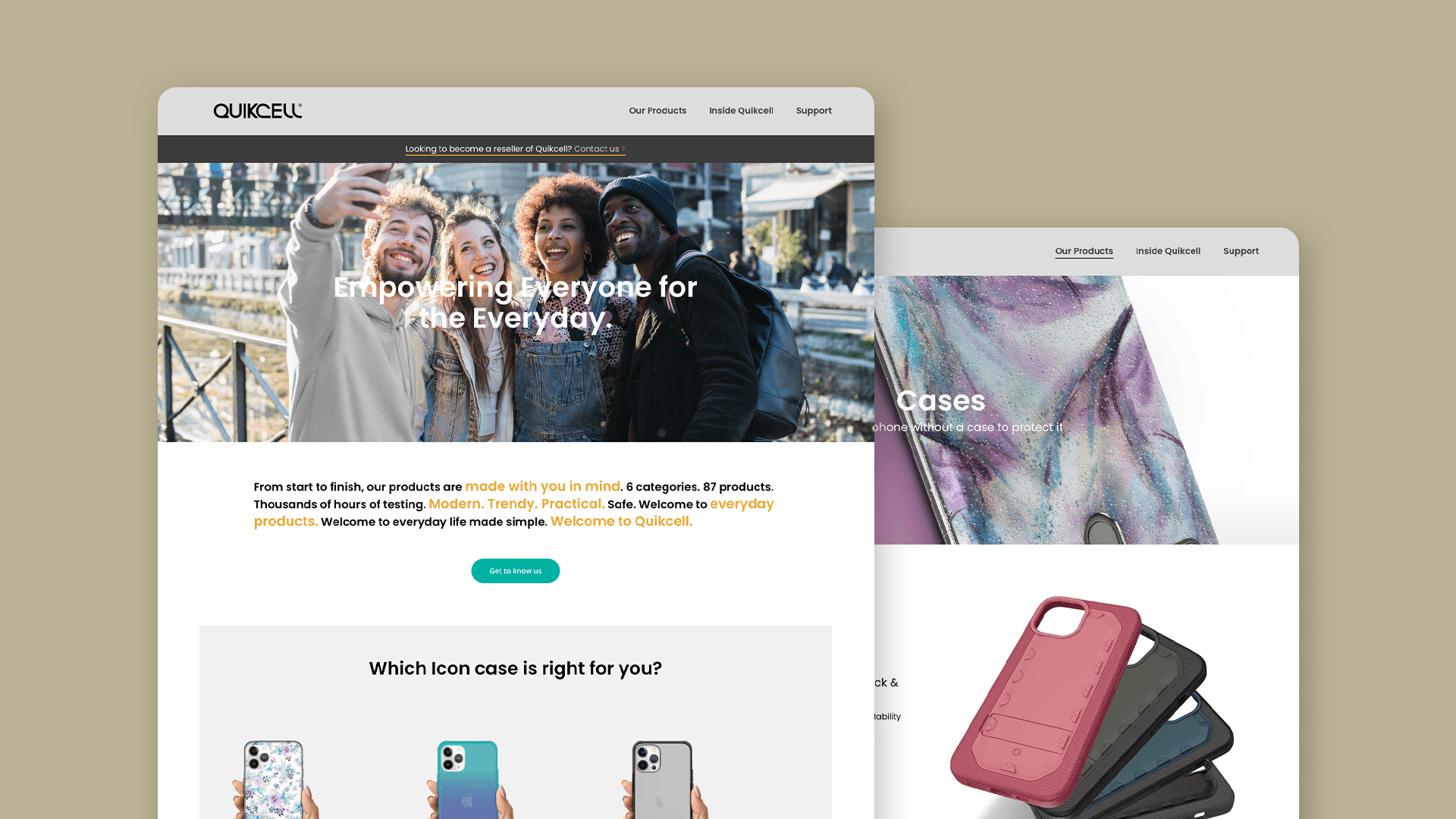
Visual system. The refreshed Quikcell brand was applied throughout, updating colors, iconography, and typography to create a consistent experience from packaging to screen.
Solution
The redesigned site moved from a dense, single-page experience to a structured, scalable system. Visitors can now navigate directly to the product category or support content they need. B2B partners have a clear path to documentation and brand resources. Customers who scan a QR code on their packaging land on a setup guide built specifically for their product. And the "Inside Quikcell" section gives the brand a place to tell its own story rather than letting the product grid do all the talking.
Impact
The site launched with clearer navigation, stronger brand storytelling, and a support infrastructure that didn't exist before. The Quick Start pages in particular addressed a gap that had been generating repeated confusion for both consumers and retail partners, giving people a direct path to the help they needed right at the moment they needed it.