Quikcell Brand Refresh
Overview
Tools
Problem
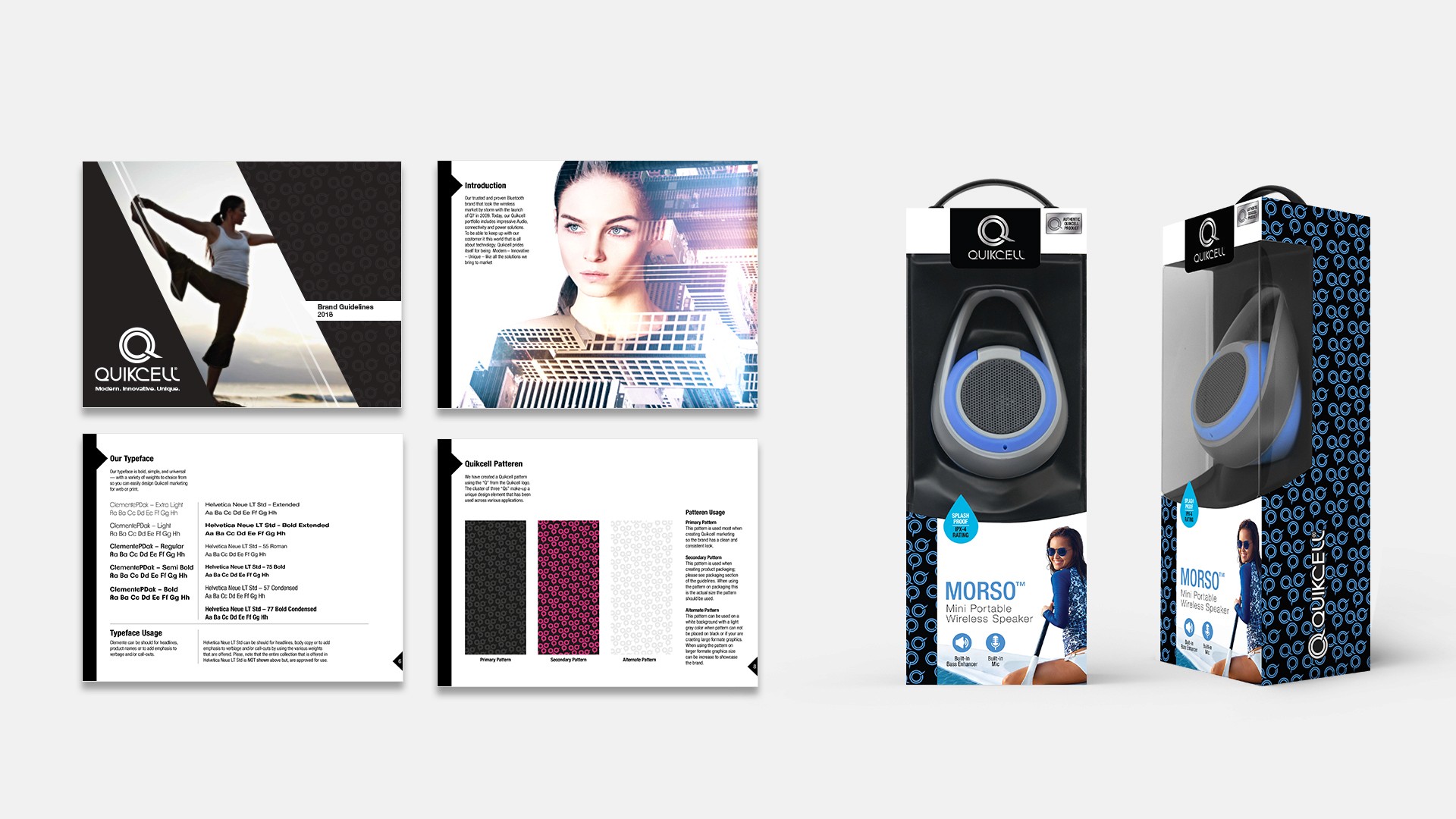
The existing Quikcell brand had aged out of relevance. The color palette felt dated, the typography was misaligned with where the brand needed to go, and there was no unified visual system holding it all together. Different touchpoints looked like different brands. The refresh needed to solve all of that while building something flexible enough to scale across both physical and digital applications.
Process
The project ran over a couple of months. We started with an audit of existing brand assets, mapping inconsistencies across packaging, digital, and internal materials. That audit shaped the priorities: what needed to be rebuilt from scratch, what could be refined, and what visual principles needed to be established to prevent the same fragmentation from happening again.
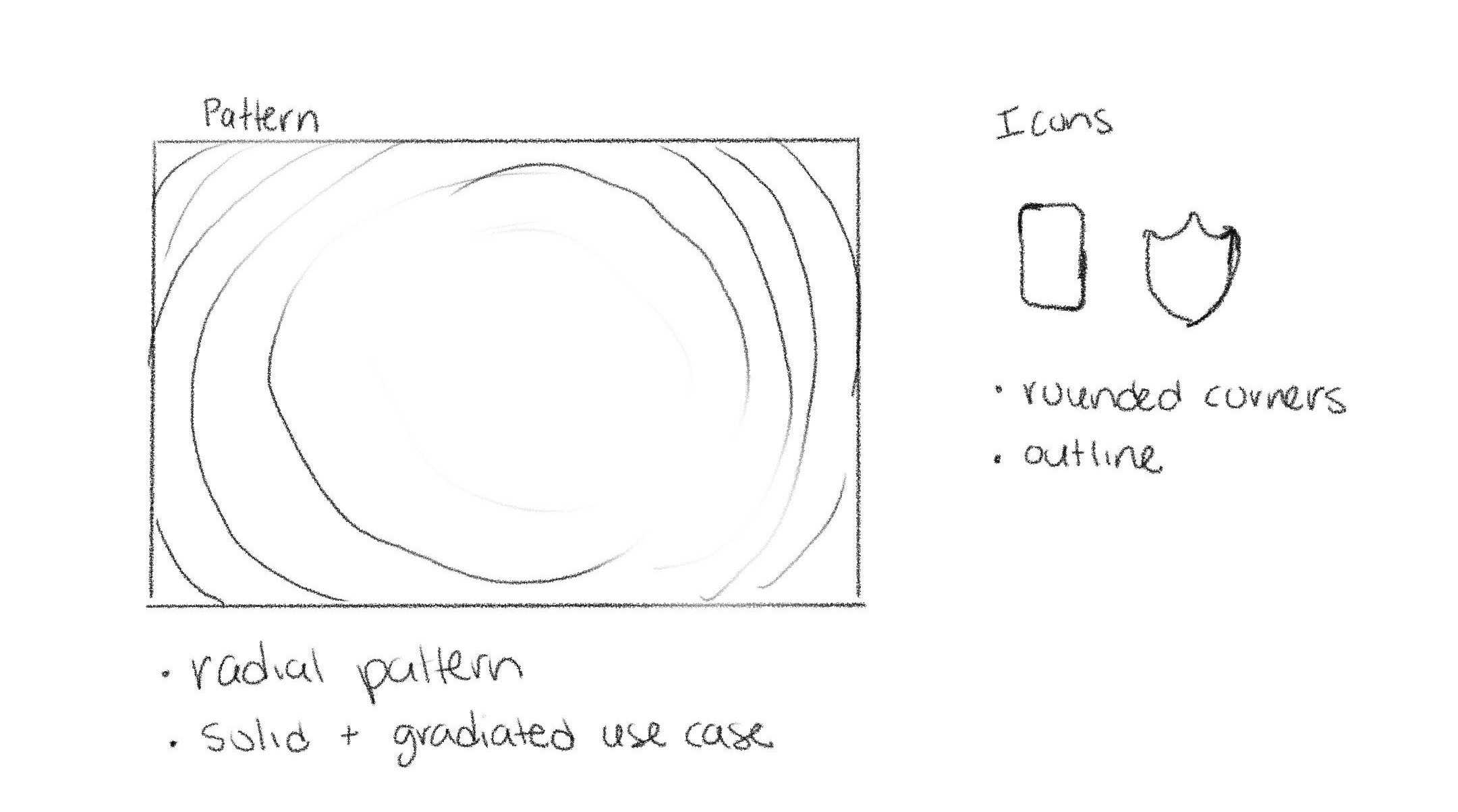
From there I worked in phases. Visual exploration and moodboarding first to align on direction, then iterative design for the icon set, brand pattern, and packaging. I collaborated cross-functionally with product teams throughout to make sure the system worked across real use cases, not just in isolation.

Solution
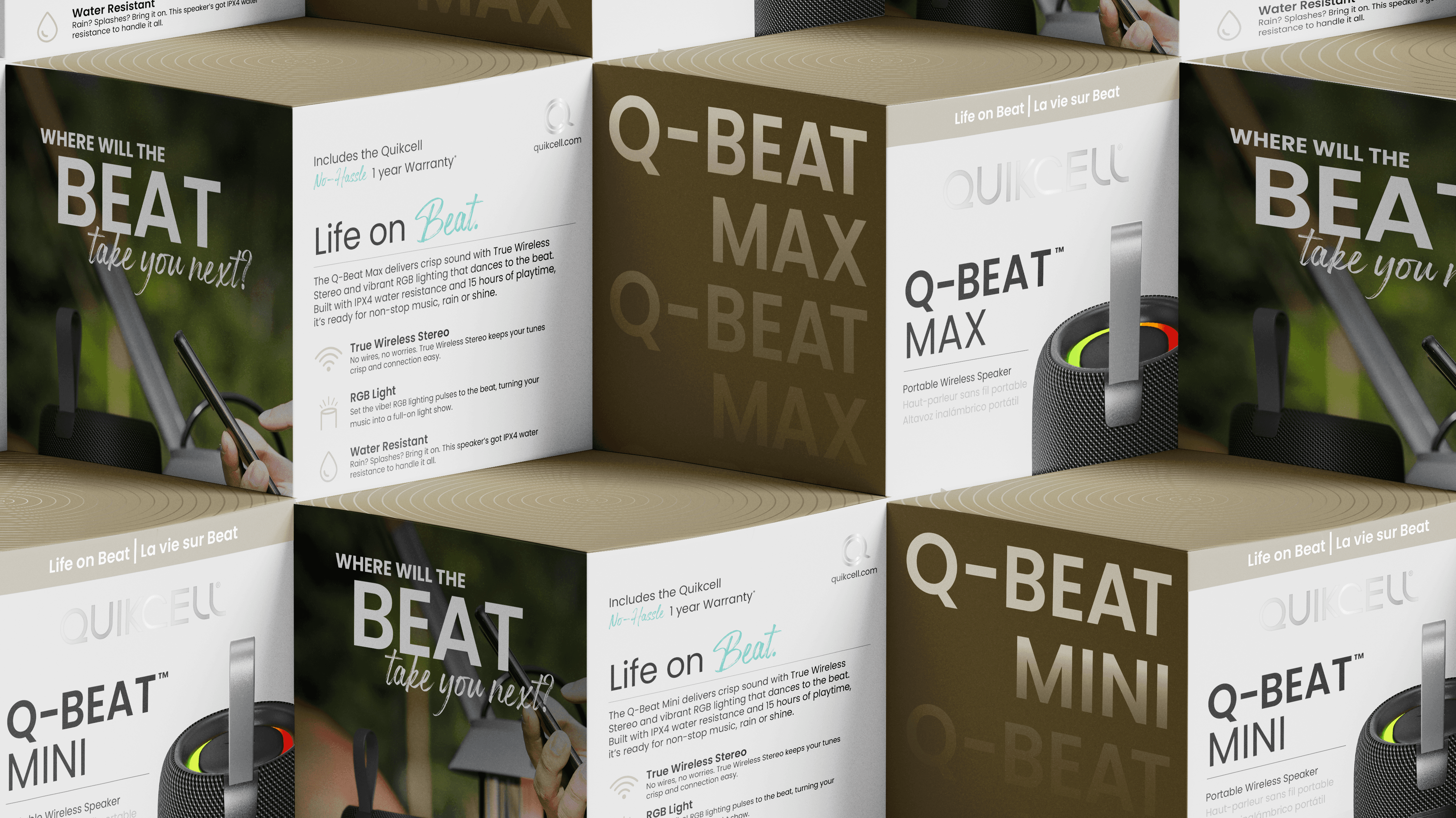
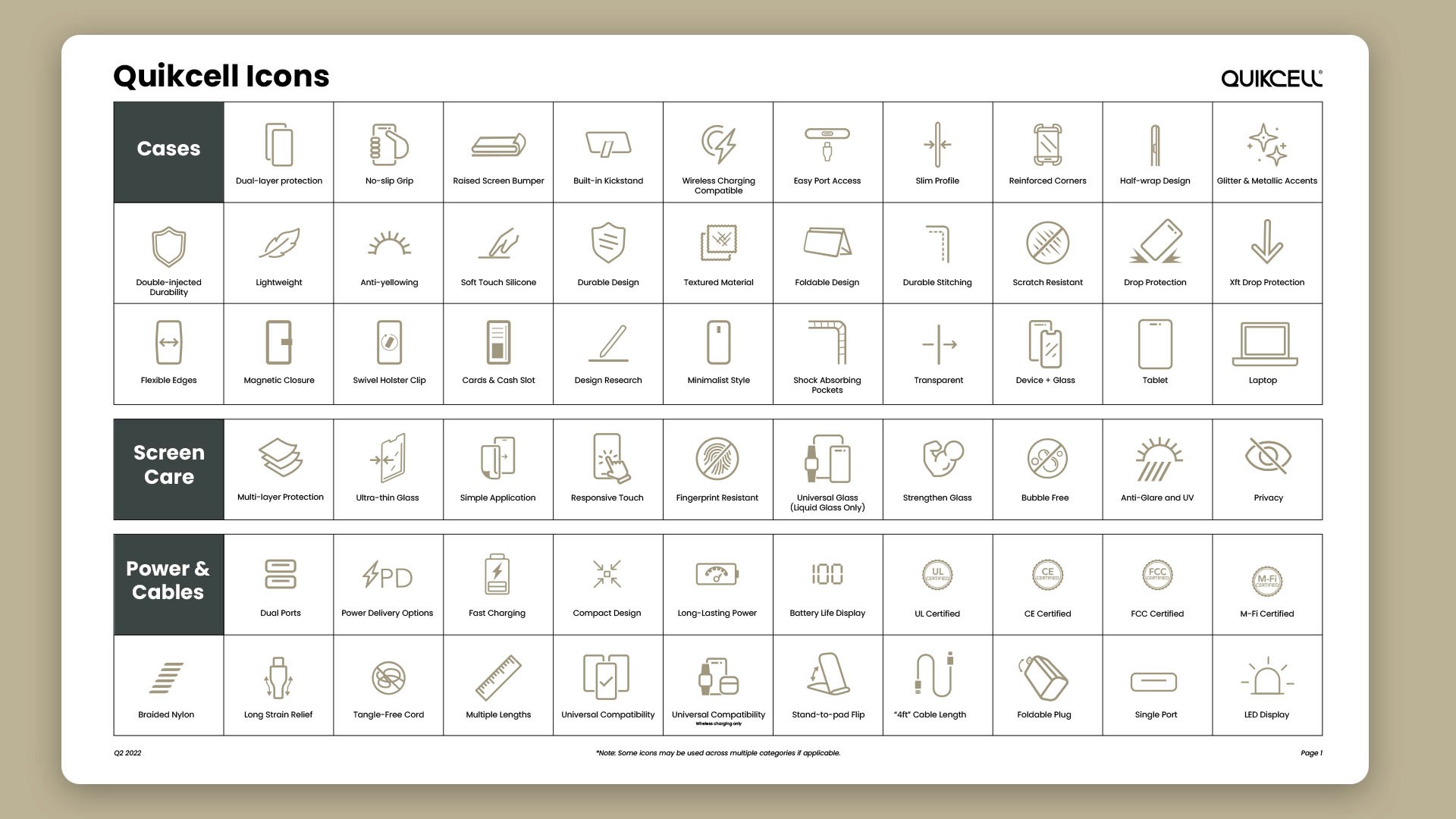
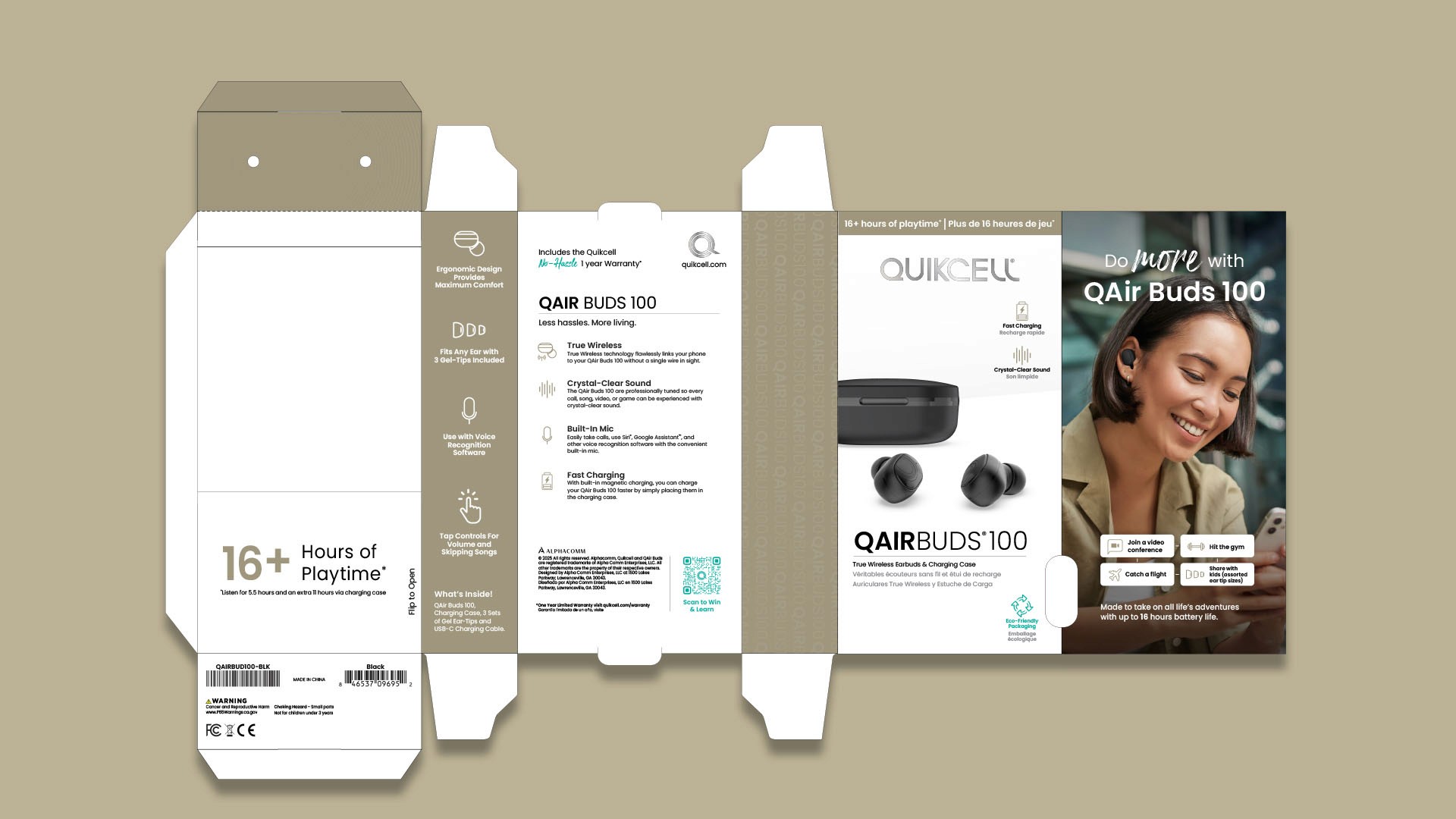
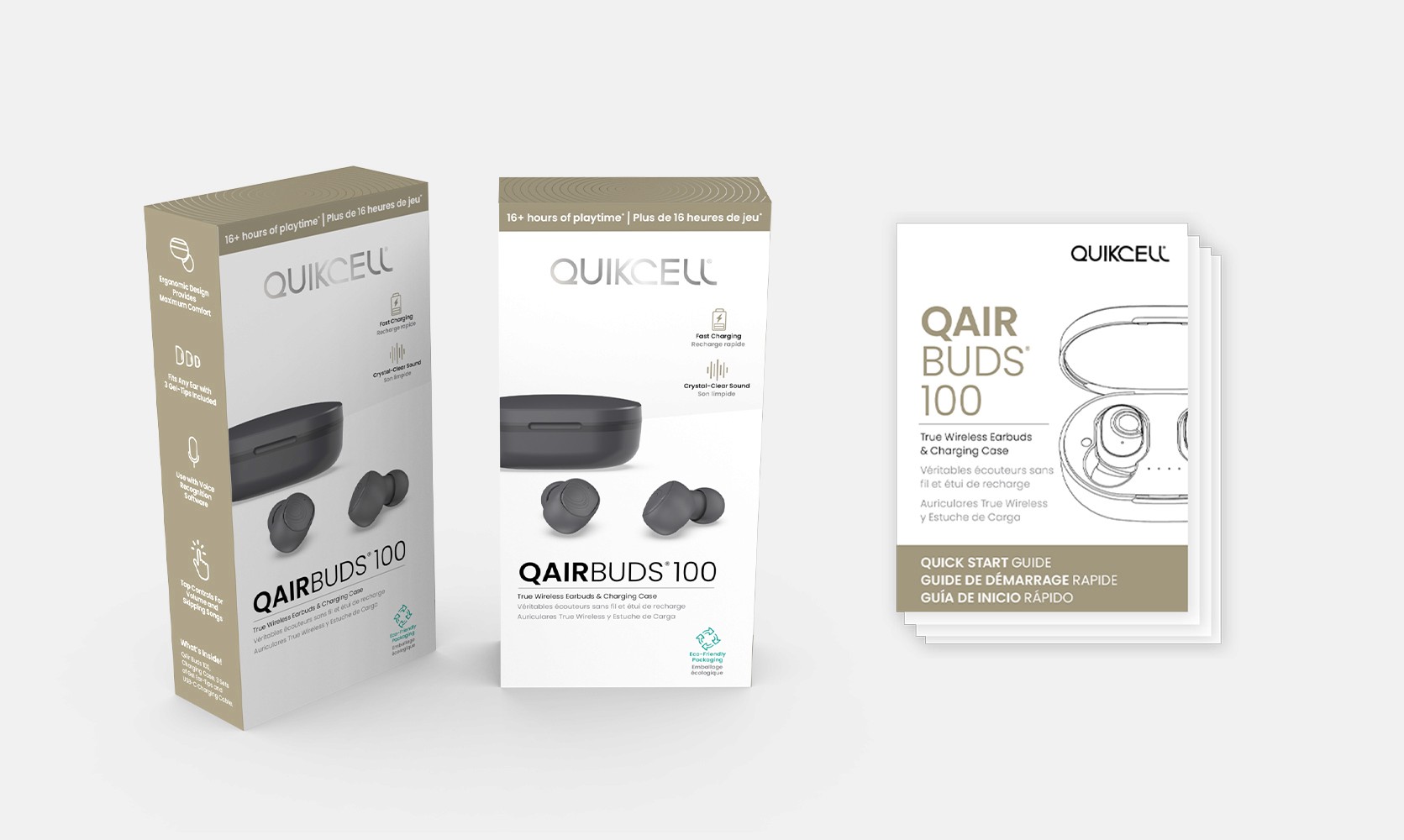
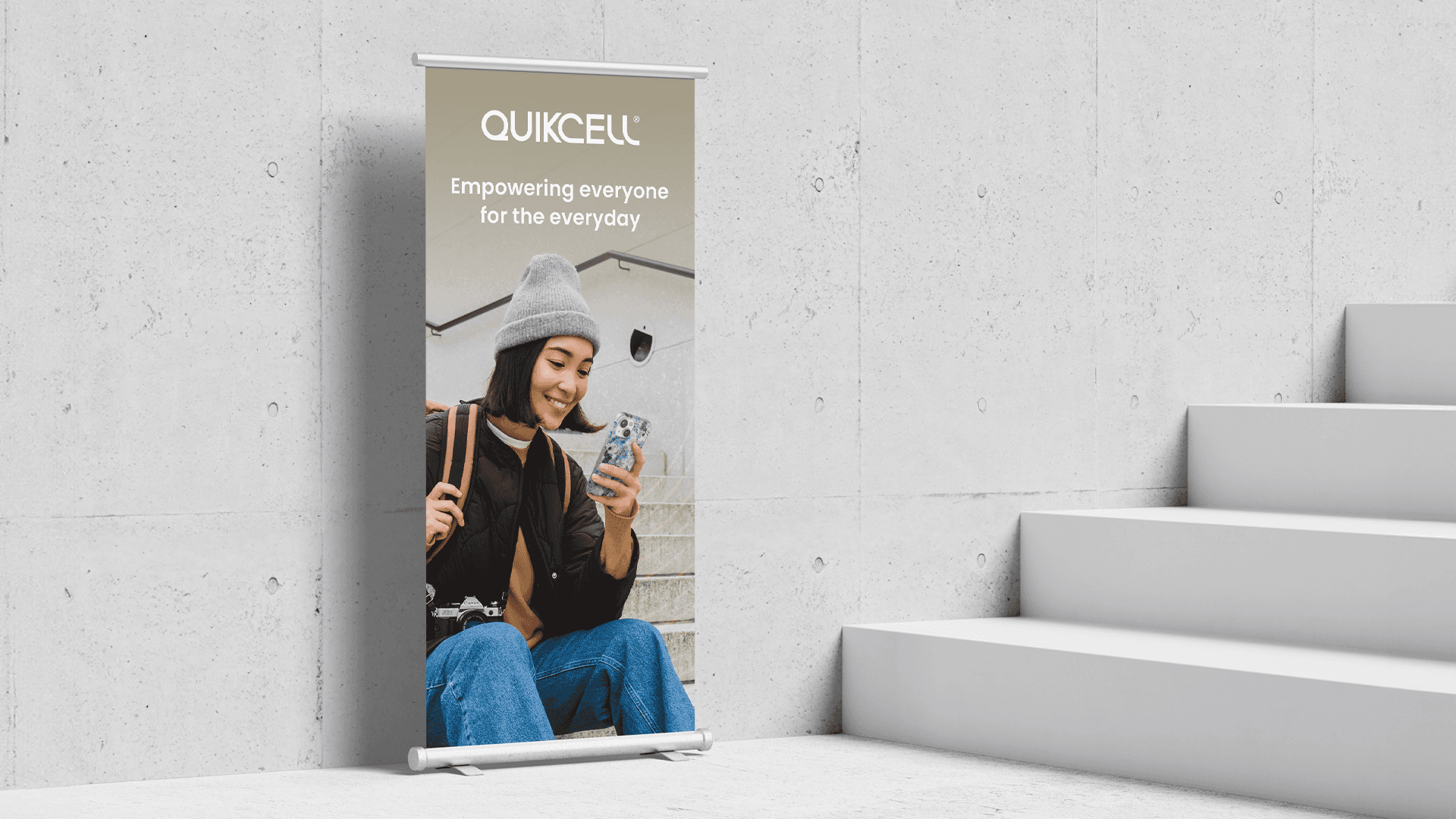
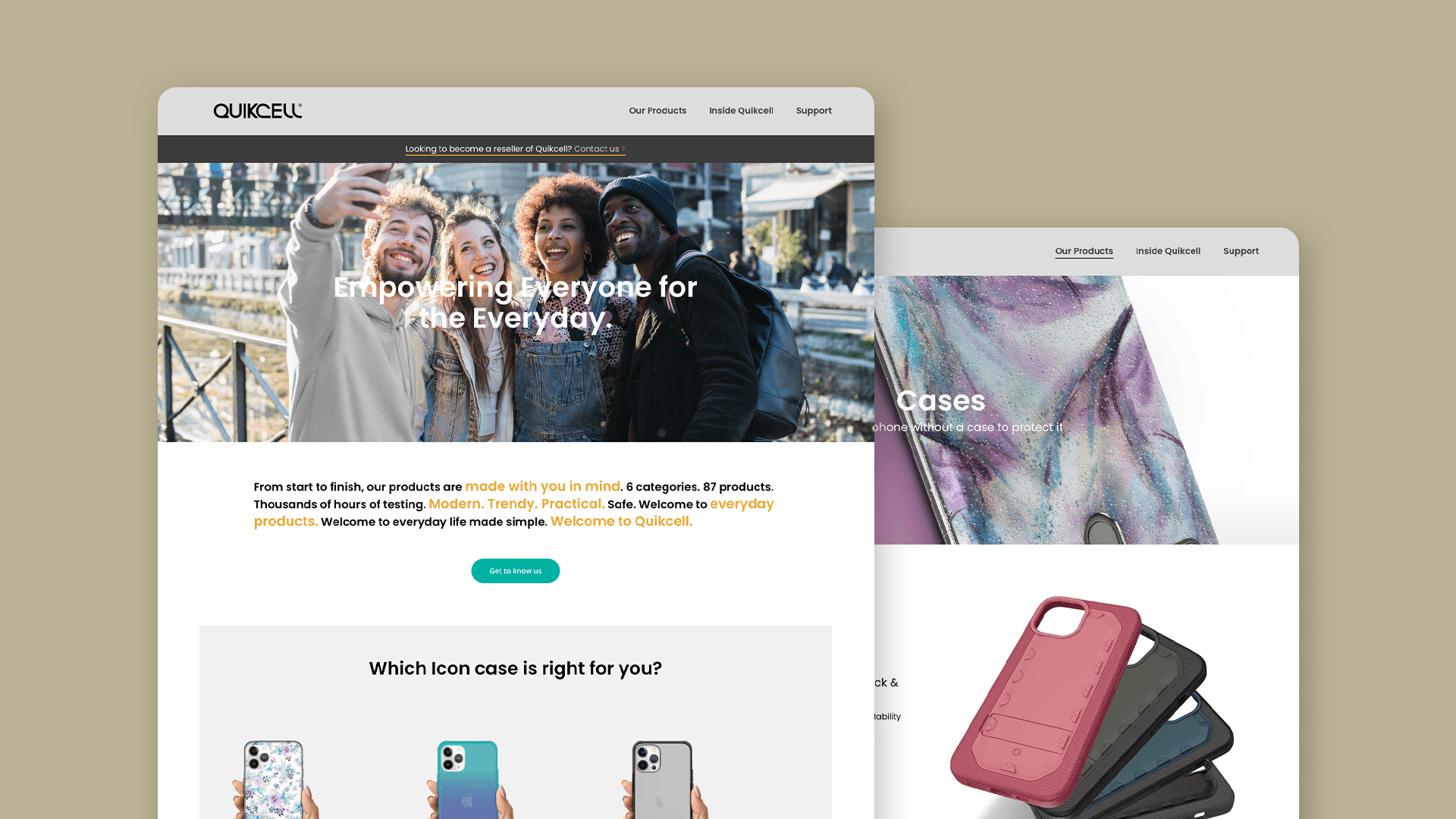
The refreshed Quikcell brand is cleaner, more modern, and built to stay consistent. The new color palette and typography create a tone that feels approachable without losing confidence. The icon suite is designed to work at any scale, from packaging to digital interfaces. A circular brand pattern adds visual personality and flexibility across print and digital applications. The power and audio packaging extended the new brand system into a product category with its own considerations, keeping the family cohesive without forcing a one-size-fits-all approach.
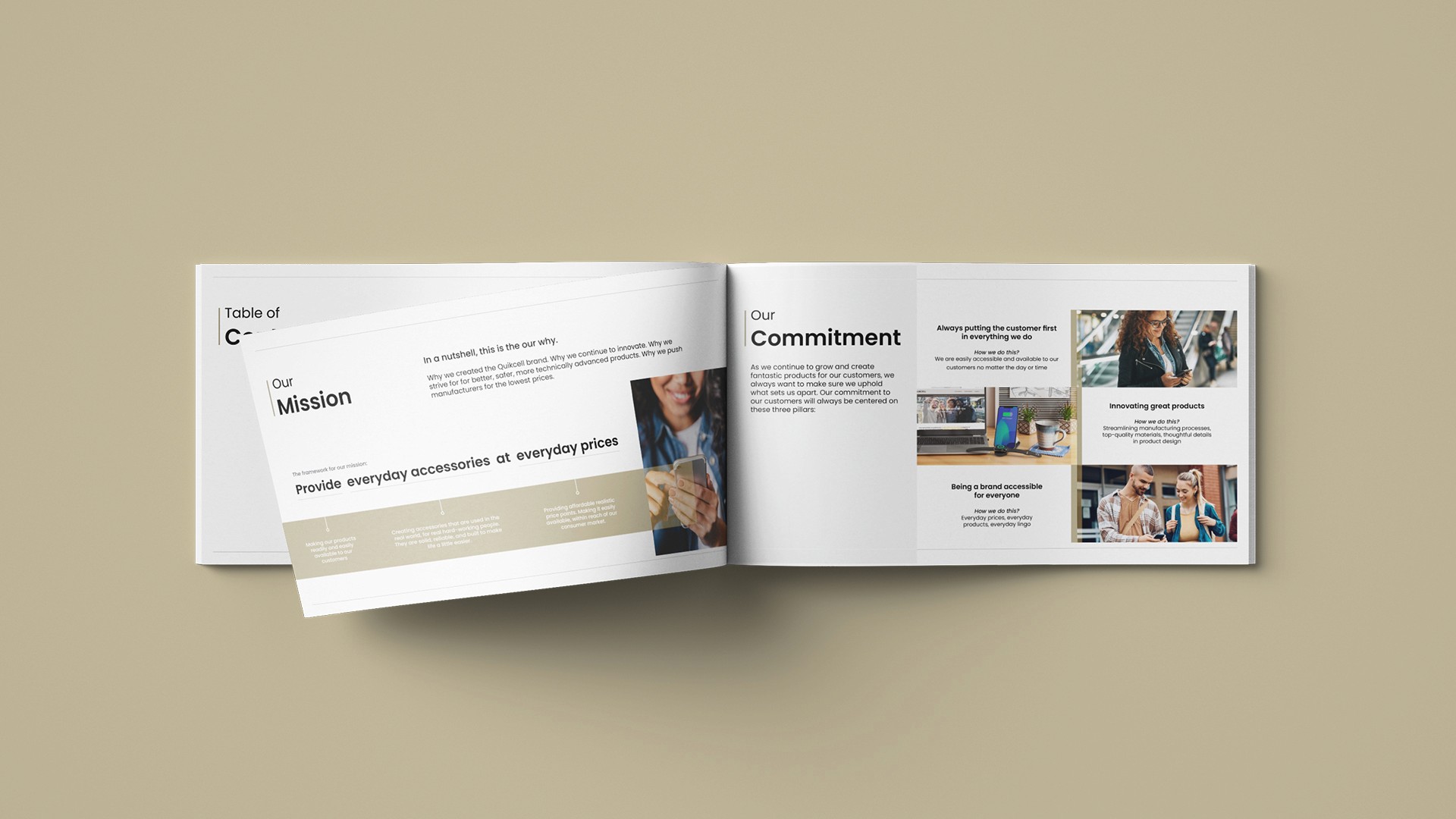
The brand guidelines I created document every element of the new identity, including logo usage, iconography, color, typography, and tone of voice. They exist so the brand stays cohesive long after the project ended, regardless of who is applying it.
Impact
Leadership loved the result. After a couple of months of work, Quikcell went from a brand with no cohesive system to one with a complete, documented identity ready to scale across retail, digital, and beyond.